Flamenco show at El Patio Sevillano, with a drink or dinner
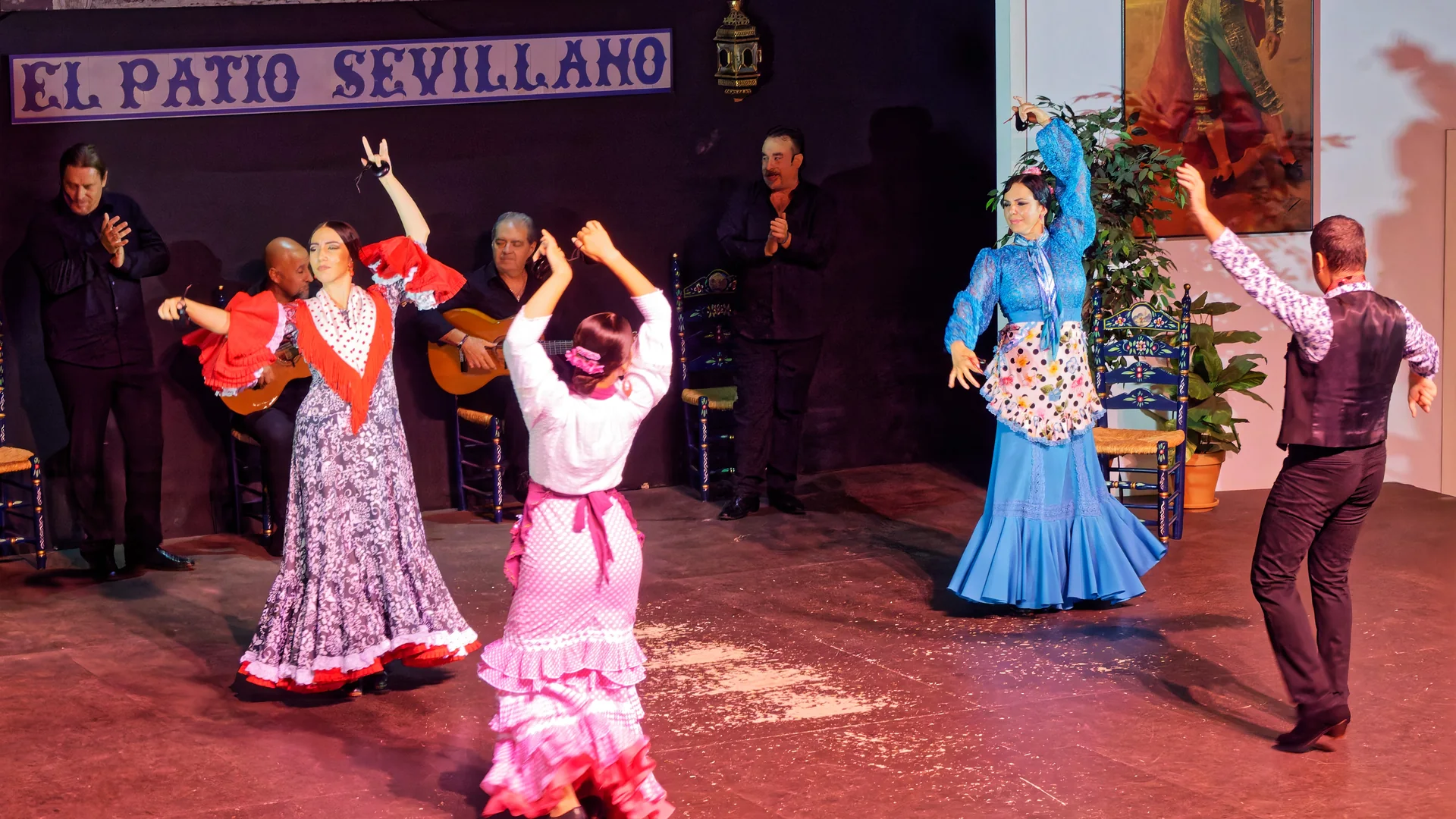
A live company of dancers, singers and guitarists on a long-running Seville tablao stage. Your chosen option adds a drink or a dinner.
Seville · Flamenco tablao
A live company of dancers, singers and guitarists, with a drink or a dinner beside the stage.
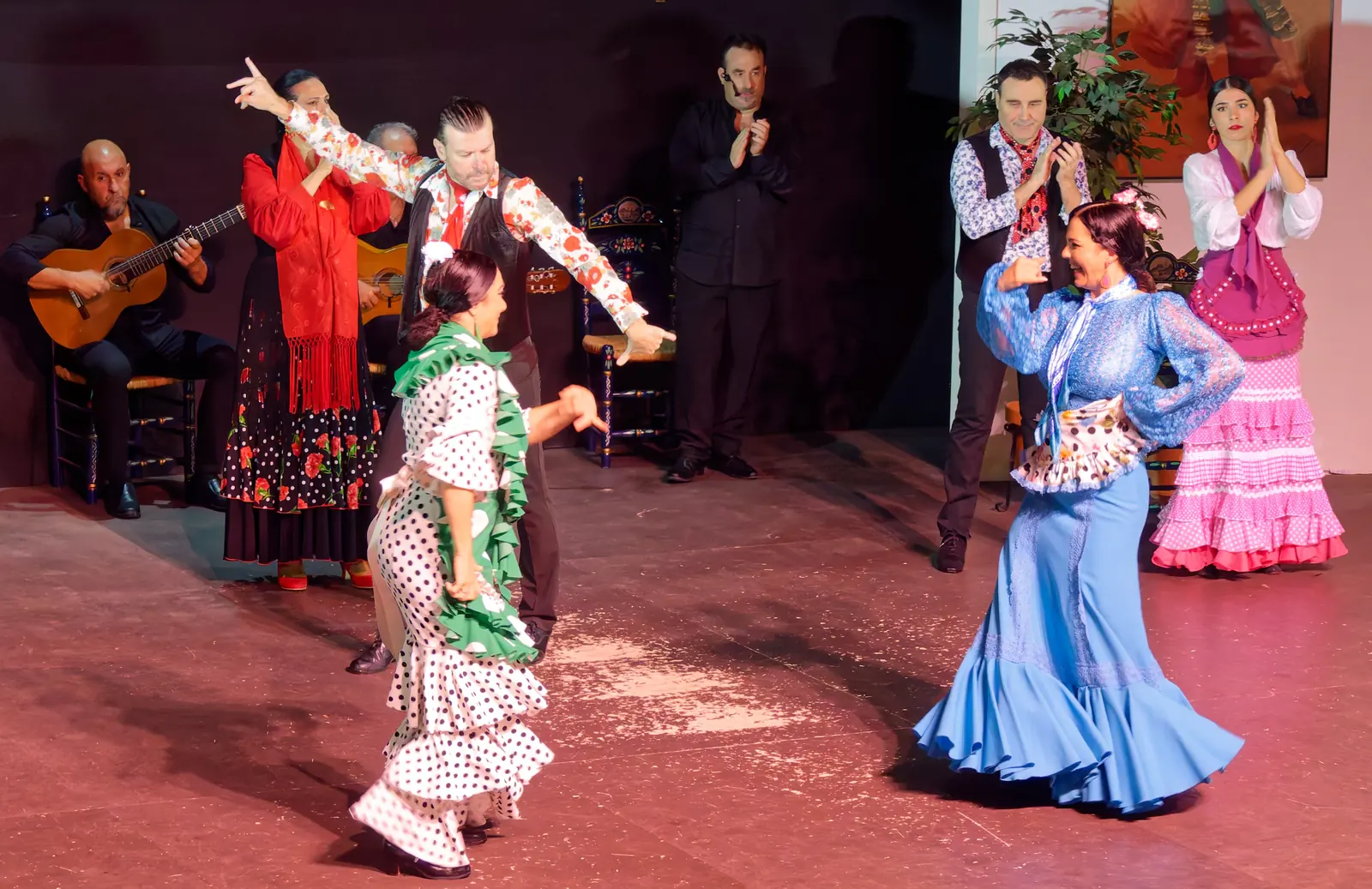
Castanets, fans and capes, then the whole company in a bulería and sevillanas to close the night.
At a glance
The house and its record
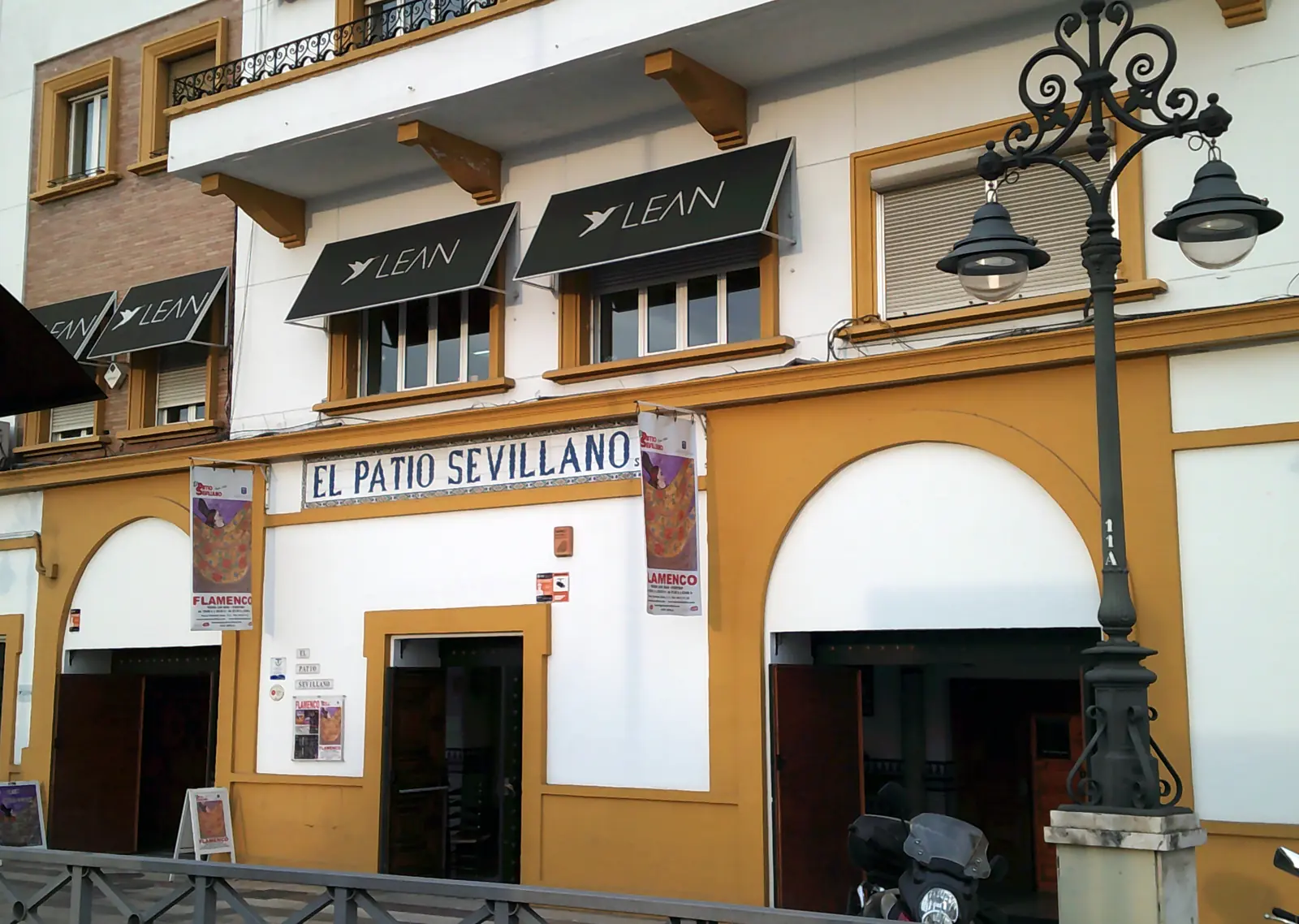
The venue's history page opens in 1952 with Cortijo El Guajiro, which it calls a pioneering tablao in Seville and in Spain. In 1956 it opened El Patio Andaluz on the Plaza del Duque, and in 1973 it moved, under the name El Patio Sevillano, to the bank of the Guadalquivir facing Triana. The company has had three homes and one idea: flamenco staged for an audience. The photograph shows its building on Paseo de Cristóbal Colón in January 2019, while the venue's site now gives Avenida de las Razas 20 as its address.
The venue's pages say that Matilde Coral, El Farruco and Cristina Hoyos have danced on its stage, and its history page adds Trini España and Manuela Vargas among those who began at the first Cortijo. Wikipedia describes Hoyos as a dancer and choreographer born in Seville whose own company later performed at the Paris Opera.
UNESCO calls Andalusia the heartland of flamenco and lists the art on its Representative List, inscribed in 2010. Wikipedia says the neighbourhood of Triana, across the river from the old centre, has a vibrant flamenco culture, and that Seville opened one of the first cafés cantantes, the venues from which tablaos later grew.
On the programme
Flamenco has more named forms than one evening can hold. These are the ones the venue's own pages point to, with a line on what each means.
The named forms
Palos are the traditional forms of flamenco, each defined by its own rhythm, mode, verse type and origin. The venue says the show presents several palos in their different styles, so a single night holds more than one mood.
The fast closer
Wikipedia calls the bulería a fast, twelve-beat form that began with the Romani community of Jerez in the 1800s and often brings a flamenco gathering to its close. The venue closes with a joint bulería.
Seville's own dance
Sevillanas are folk songs and dances of the Seville area, danced at fairs and festivals. Wikipedia adds that would-be flamenco dancers usually learn them first. The venue ends the night with them.
Castanets, fans, hats and capes
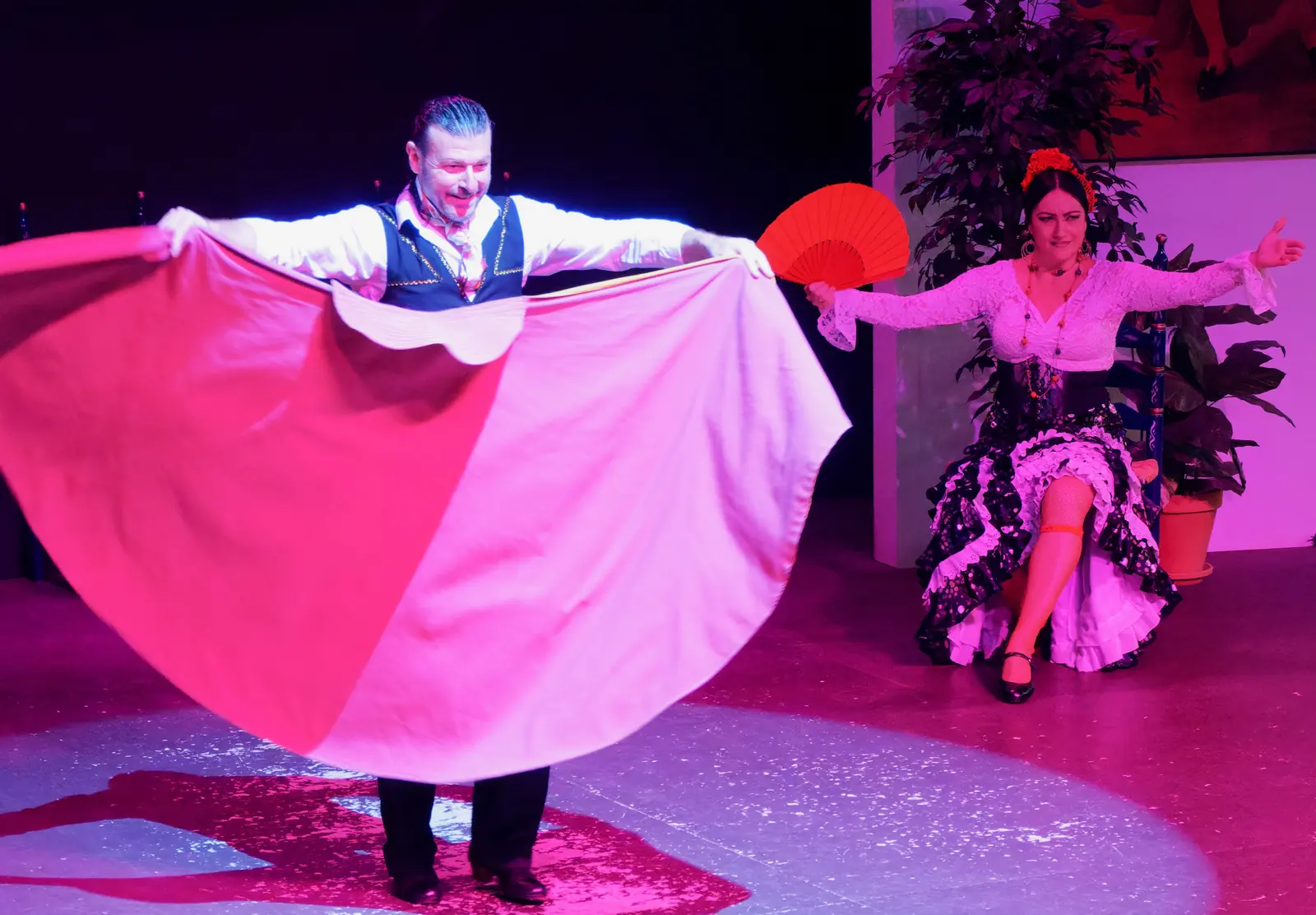
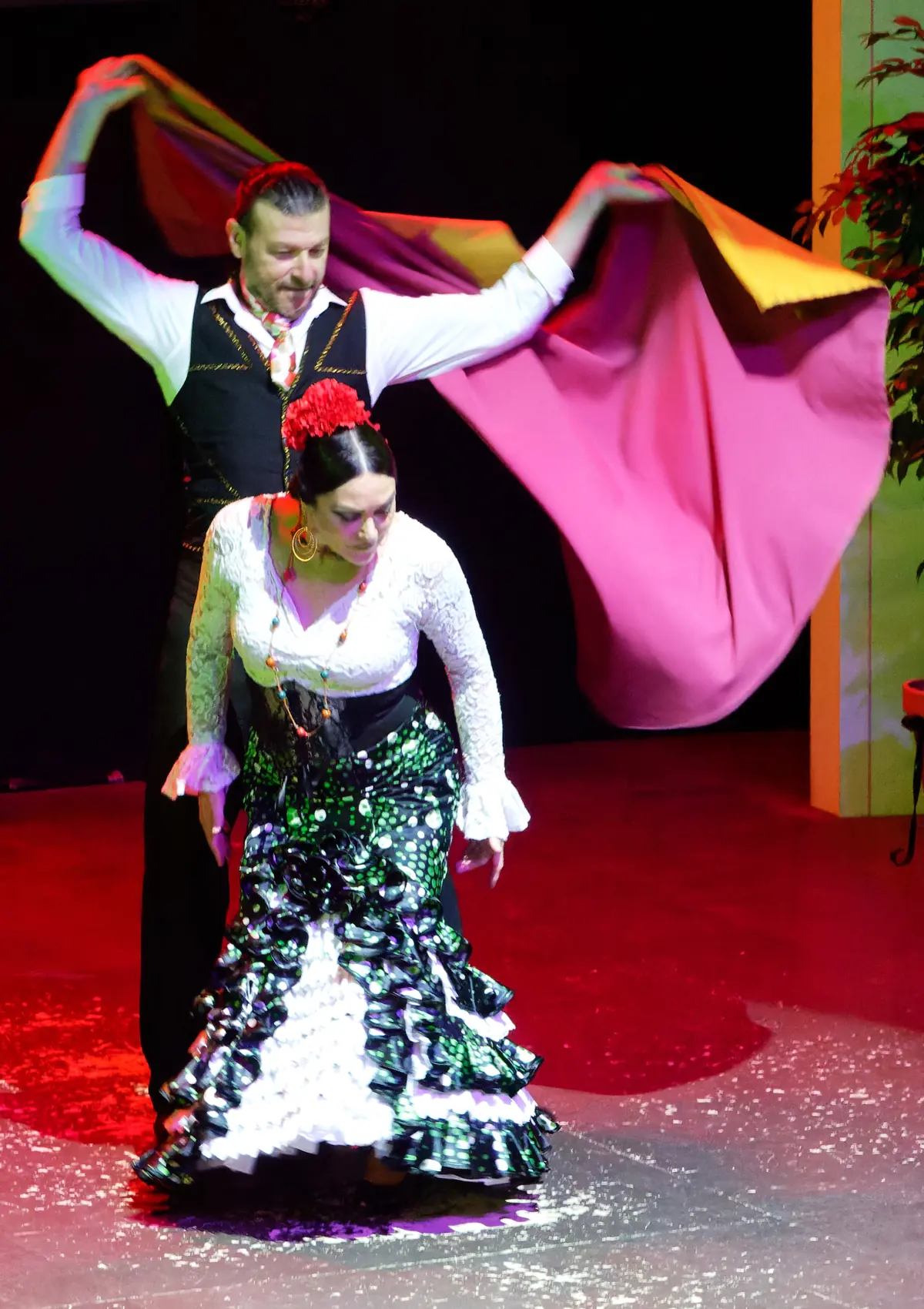
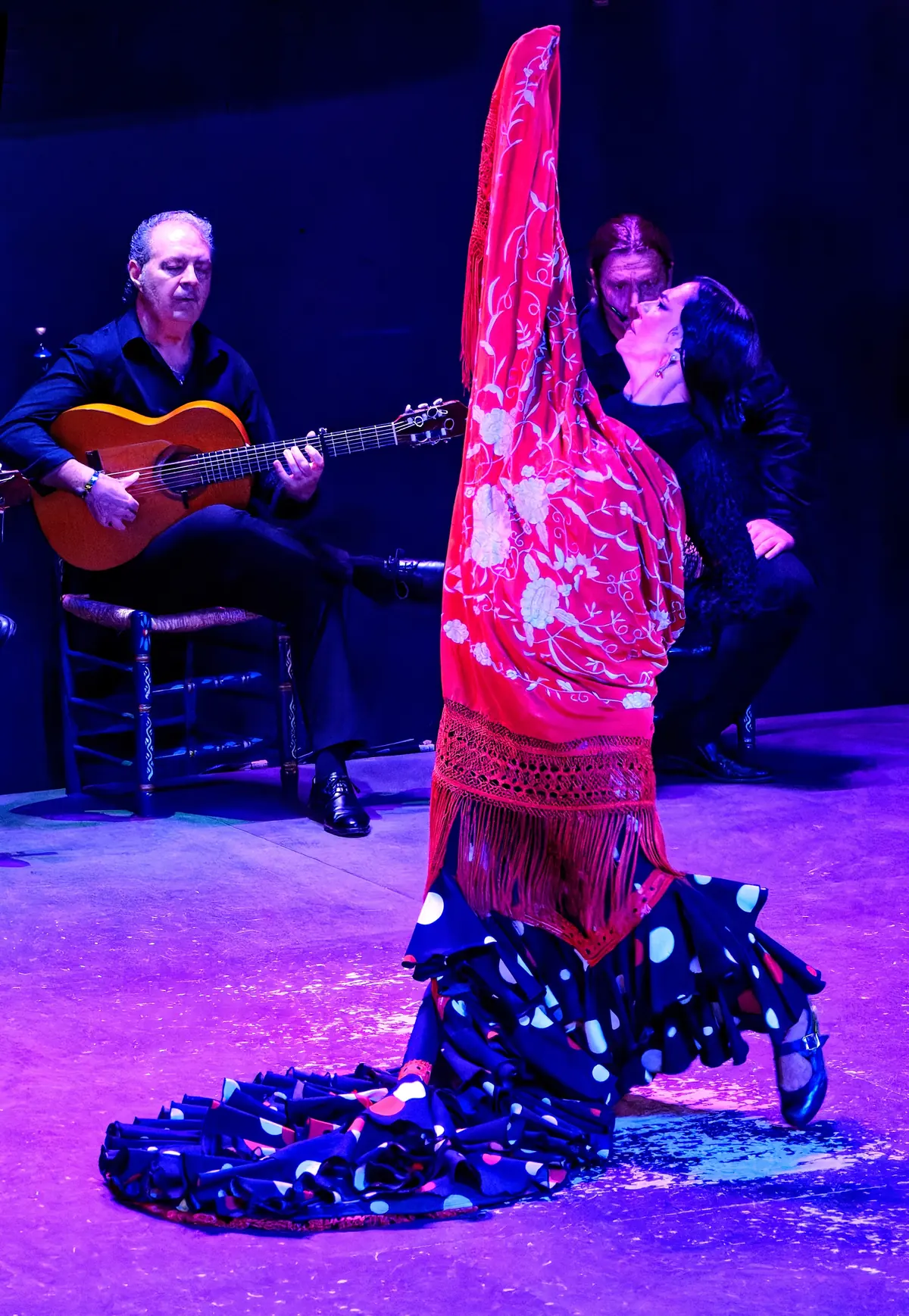
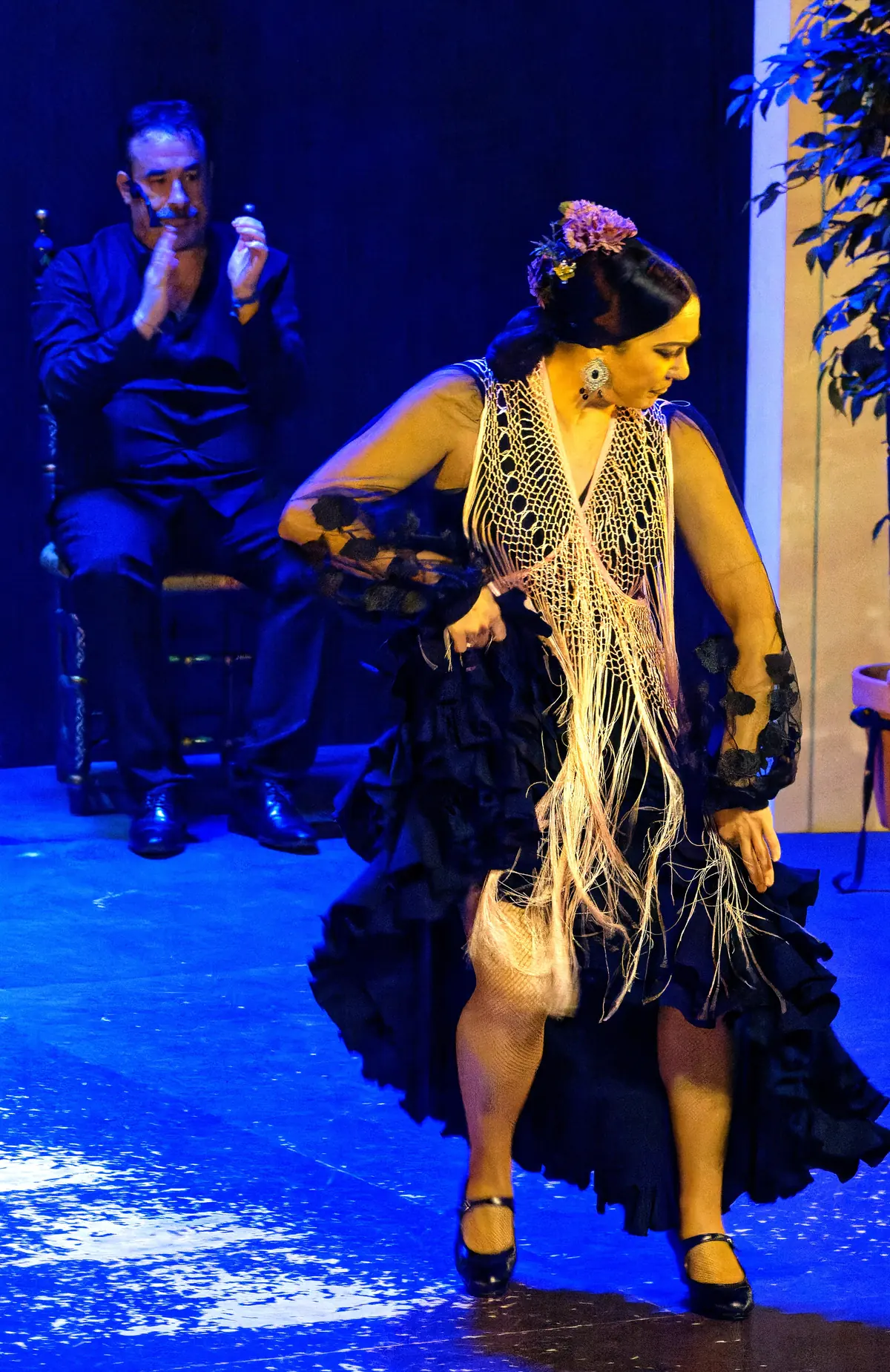
The venue lists palillos, which are castanets, fans of different kinds, hats and capes among the props. It says the capes are used in its staging of Carmen. Wikipedia notes the Manila shawl as part of a flamenco dancer's costume.
Two composers of Andalusia
The venue says it uses music by Manuel de Falla and Joaquín Turina. Falla was born in Cádiz and Turina in Seville, and Wikipedia says Andalusian flamenco strongly shaped Falla's work and that much of Turina's shows Andalusian influence.
Spanish song
The venue lists classical Spanish dance and canción española beside the flamenco palos. Wikipedia describes canción española, also called copla, as a form of Spanish popular song that flourished in the 1930s and 1940s.
The company picks the programme and it changes. Use this to listen with, not as a running order.
How the night runs
The venue's site describes one continuous performance, so the evening has a clear shape.
A drink or a dinner arrives with your option. Start times depend on the date, so check the calendar and your confirmation and be seated before the lights change.
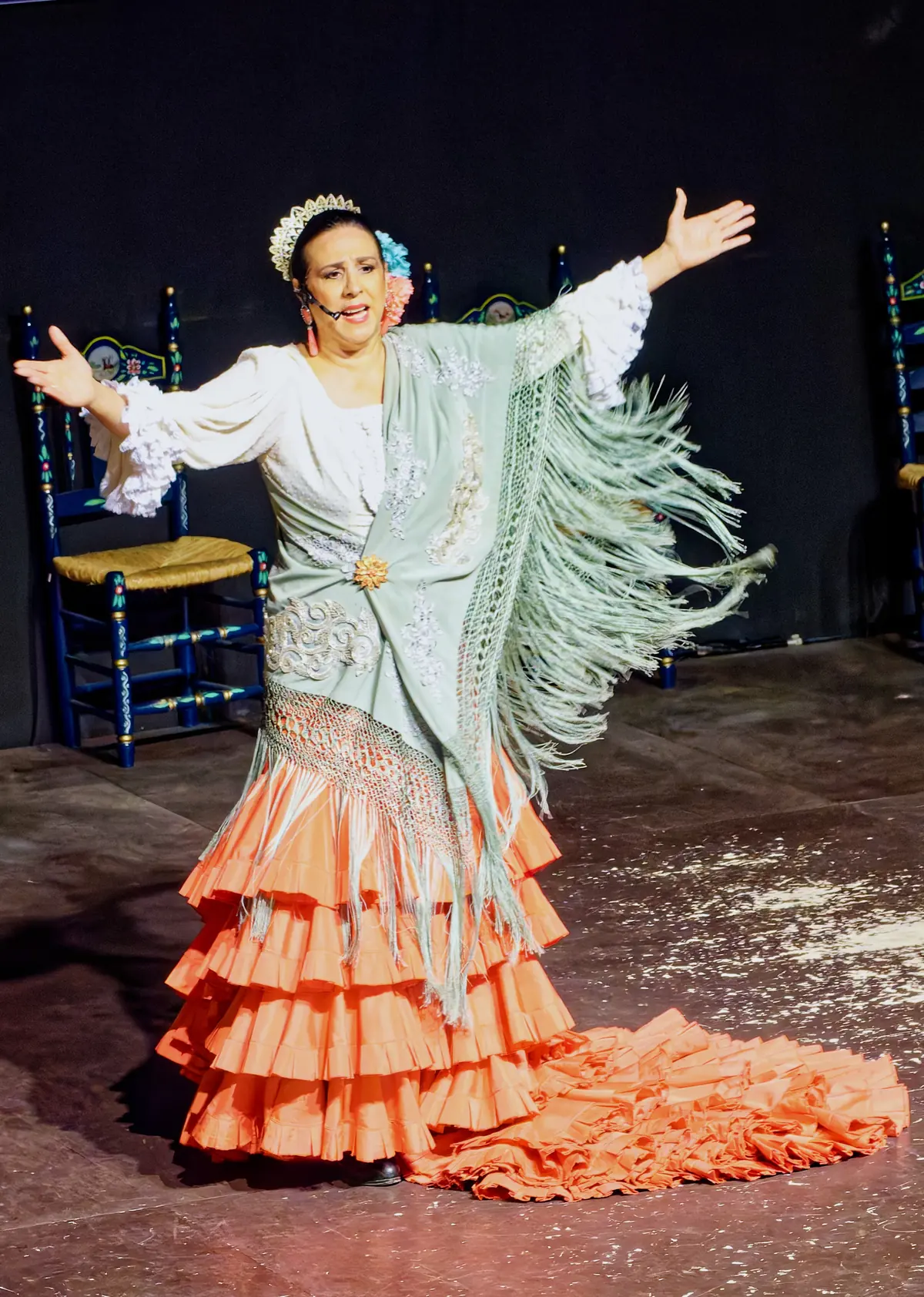
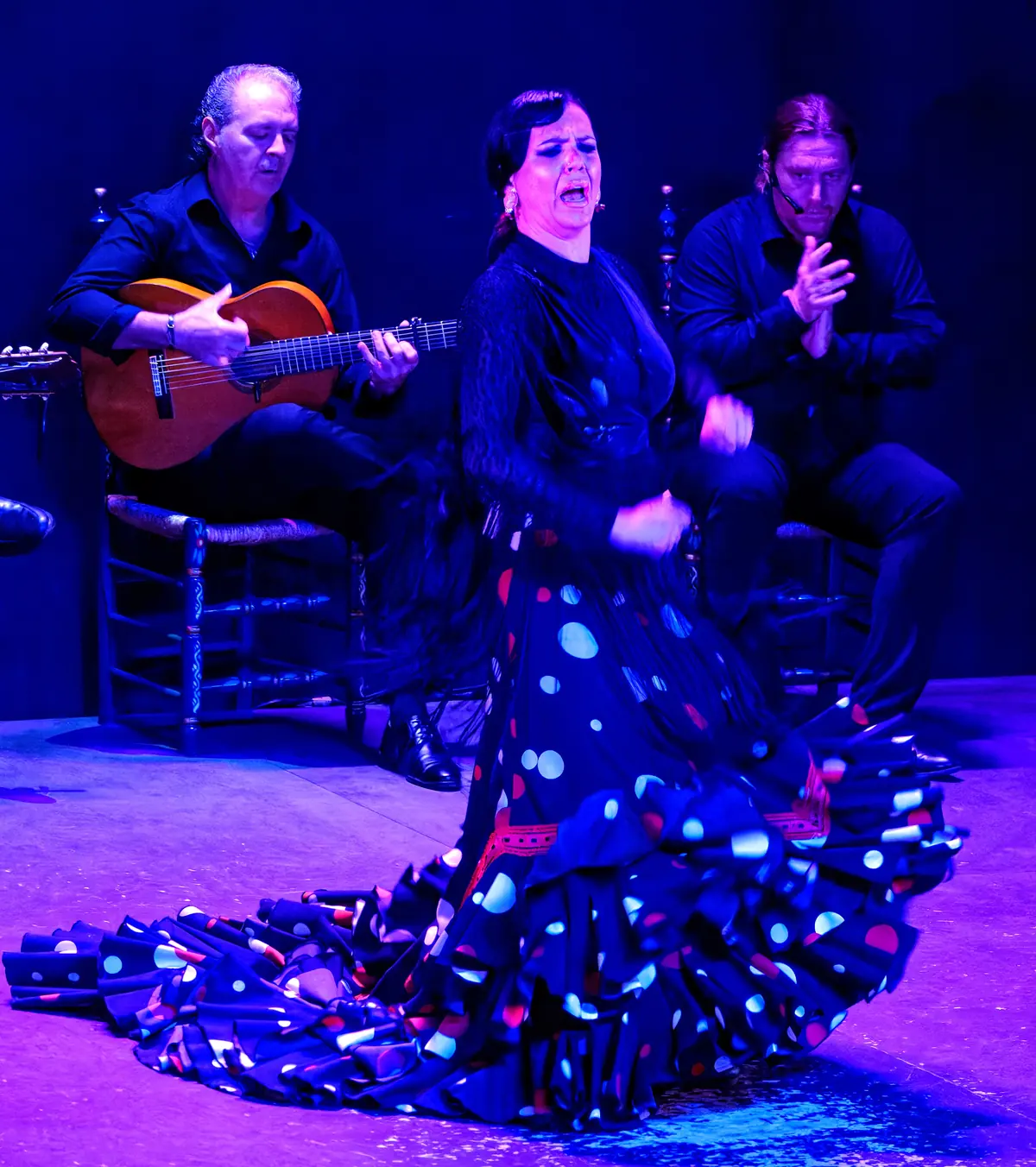
Dancers, singers and guitarists perform live. The venue's site lists castanets, fans, hats and capes among the props, and says the music draws on Falla and Turina as well as classical Spanish dance and popular flamenco.
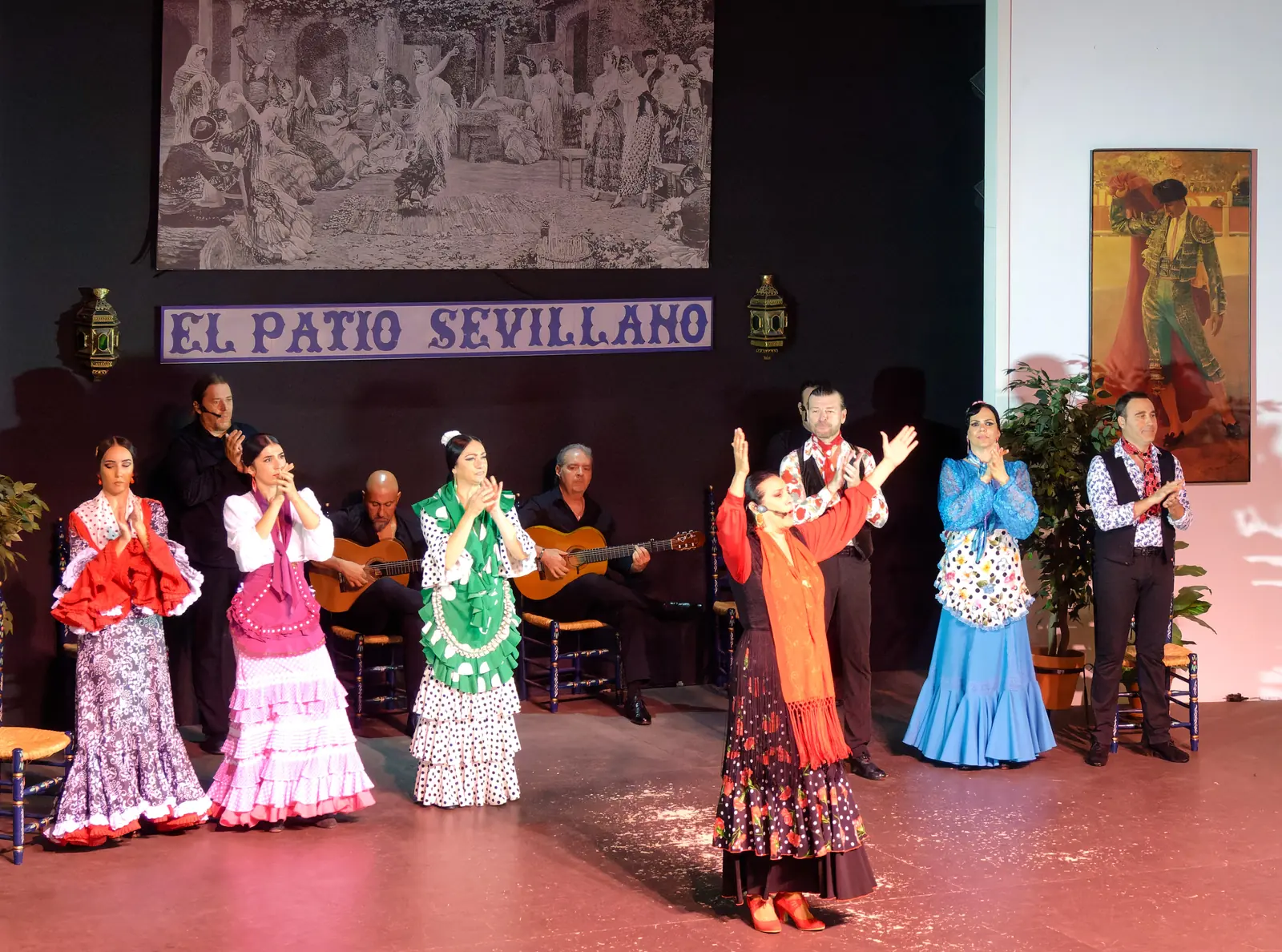
The venue says the show closes with every artist on stage: a joint bulería, then the sevillanas, the traditional dance of Seville. The programme changes from night to night, so the closing is the most reliable part.
What the ticket includes
Short facts to read before you pick a date.
On the stage
Every photograph here shows the show at El Patio Sevillano, taken on one evening in October 2024, plus the building on Paseo de Cristóbal Colón in 2019. Casts and programmes change from night to night.
Picking a Seville flamenco night
| The night | What it is | Who it suits |
|---|---|---|
| A tablao with a drink or dinner (this ticket) | More than a dozen artists live on stage, plus a drink or a dinner, whichever option you pick. | A classic Seville tablao evening, booked in one go |
| A courtyard show in Santa Cruz | A different, smaller venue: about an hour of dance, song and guitar from a small company, with unreserved seats. | A shorter night in an intimate setting |
| Show, then a rooftop dinner | A tablao show with a cocktail, then dinner at a hotel rooftop restaurant with views of the cathedral. Three hours in all. | A long night out with dinner built in |
Choose your evening
Card one is the ticket this guide covers. The other two are separate Seville flamenco evenings, each with its own stage, format and fare.
A live company of dancers, singers and guitarists on a long-running Seville tablao stage. Your chosen option adds a drink or a dinner.
About an hour of dance, song and guitar from a small company, in the courtyard of a historic residence in the old Santa Cruz quarter. Seats are not reserved.
A three-hour evening: a tablao show with a cocktail, then dinner at a hotel rooftop restaurant with views of Seville Cathedral.
More Seville ideas
Practical notes
On its own site the venue gives the address as Avenida de las Razas 20, 41012 Seville. The booking page links a map pin for the meeting point, so check the pin and your confirmation together before you set out.
Take the drink option for a lighter evening and a dinner option if you want to eat there. One guest describes the tapas package as far more food than expected, so go hungry or choose the drink.
Every date has its own start time. Look for it on the calendar and in your confirmation, and aim to be settled in your seat before it.
The venue's site describes one performance without an interruption, so order what you want first and plan to sit through it.
You can cancel for free up to a day ahead, and paying can wait.
Guides to El Patio Sevillano and Seville flamenco
FAQ
The venue's own site says it runs 90 minutes without an interruption, and the booking page shows 75 minutes. Check the length listed for your option and plan for the longer figure.
That depends on the option. Each ticket comes with either a drink or a dinner, and you pick the option when you choose a date. Read what it includes before you pay.
Pick the drink for a lighter evening and a dinner if you want to eat at the venue. One guest describes the tapas package as a great deal of food, so arrive hungry or choose the drink.
Each date has its own start time. It is shown on the calendar and on your confirmation, and it moves with the date and season.
Yes. Nothing is charged if you cancel at least 24 hours ahead, and a seat can be held now and settled later.
The booking page lists wheelchair access. If you need something particular, such as help at the door, ask the venue ahead of time.
Cante, guitar and dance, plus classical Spanish dance and Spanish song, according to the venue's site. The company says it uses music by Falla and Turina too, and closes with a bulería and sevillanas.
The venue calls itself that, and its history page dates its roots to 1952. Wikipedia places the spread of tablaos in the 1960s, so treat "oldest" as the venue's own description.
Fares depend on the date and the option. Pick a date and the price shows in your own currency.